

We want a breath of fresh air in Bavaria.
We ask the state government to keep its climate policy promises.
Fourteen new wind turbines per year are not enough to keep Bavaria competitive as a business location and ensure that energy remains affordable in the future. We, the Bayernwind initiative, are an association of Bavarian companies and the WindRat (Wind Council) that aims to promote the expansion of wind energy. That is why we are working together to promote the rapid expansion of wind energy and have formulated specific proposals to this end.
So that the lack of wind power expansion does not threaten Bavaria.

„The best way to predict the future for Bavaria is to shape it. Affordable wind power is undoubtedly part of that. That is why we are clearly expressing our desire for the next Bavarian state government to ensure that its own wind power expansion targets are met on schedule.
Dagmar Nixdorf,
NIXDORF Kapital AG
Chairwoman of the Supervisory Board
“The expansion of wind energy in Bavaria is, in my view, a necessary and logical step toward ensuring the ecological sustainability of our state while strengthening its economic resilience. The Bayernwind project deserves our full support because it offers a practical and efficient solution to the urgent need to diversify our energy sources while reducing our carbon footprint. As an entrepreneur, I firmly believe that innovation and progress must go hand in hand with responsible action towards our environment and society as a whole. That is why I fully support the expansion of wind energy in Bavaria. The energy transition is a challenge, but also an opportunity for all of us. I am convinced that we in Bavaria have the know-how, the skills, and the will to master it and serve as a role model for other regions. Our wishes for the new Bayernwind are the decisive steps on this path.”
Amir Roughani,
VISPIRON Gruppe Founder und CEO

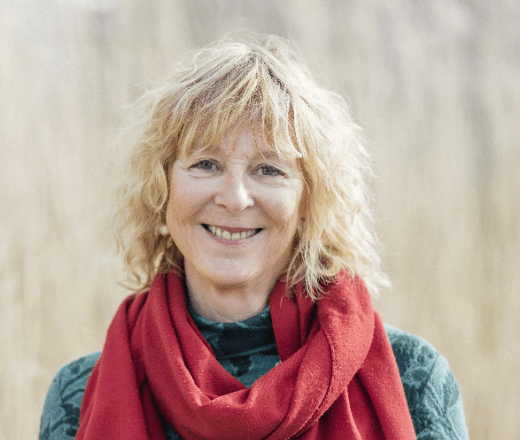
Wind energy is THE key component for a climate-neutral and sustainable energy supply in Bavaria. The Bavarian state government has been totally irresponsible in blocking the expansion of wind power for decades! If global warming continues, in 20 years we won’t have a beautiful Bavaria anymore, but dry conditions like in Andalusia!
The solutions are well-known, proven, and fascinating! Investors receive a 7% return on the only wind turbines in Berg am Starnberger See, which were fiercely opposed at the time—no one can say that this is not economical! Wind energy is citizen energy. Every citizen can participate, and it creates local jobs.
Only with the massive expansion of wind energy and other renewable energies can we maintain our quality of life in Bavaria. We must finally take action! The lack of and slow expansion of wind energy in Bavaria threatens not only the economy and the future of our children.
Dorothea Sick-Thies
Supervisory Board Member, Sick AG
Our four wishes for the current and next state government, so that a new wind blows!
1. Connect at least two wind turbines to the grid in Bavaria per week
Background: This benchmark was formulated by the Bavarian Energy Industry Association, determines the necessary expansion of wind energy capacity by 2040, and is in line with the state government’s targets, but not with the performance of the state of Bavaria and its 71 districts and 25 independent cities.
2. Connect at least two wind turbines per county per year to the grid
Background: With 71 counties and 25 independent cities and an annual increase of 100 installations (see point 1), this results in 1.5 – rounded up to 2 – commissioning per county per year. This is an approval capacity that can reasonably be expected of every county. The slowest construction rate among the top 50 counties nationwide is four wind turbines per county per year – and that is in Prussia.
3. Approve with new digital Bavarian standard after six months at the latest
Background: In the case of urgent expansion, bureaucracy must maintain pressure via fictitious approval, as known from the Bavarian Building Code § 68 BayBO, in order to shorten its processes to a reasonable time frame. No one wants to explain that in the high-tech state of Bavaria in 2023, people still had to wait years for approvals. It goes without saying that these approvals and documents must be submitted and processed entirely digitally.
4. Appoint a new “wind manager” for each district on top
Background: In addition to further simplifications by the federal government, rapid approvals are the result of project managers who drive the approval processes, persistently follow up, and take shortcuts to speed things up. Every district needs at least one new full-time wind energy manager (approval manager) who is responsible for the above standards and supports the district office, planning authorities, and district administrator in this important task.
Facts about wind power expansion. The most important information in brief
Bavaria needs a breath of fresh air: just 14 new wind turbines for an industrial state like Bavaria last year is clearly not enough (from 1,129 (2021) to 1,143 (2022), source www.statista.com)
In 2021, Bavaria’s total approval and expansion output was again poor to inadequate, equivalent to five modern 5.5 MW plants, totaling 25 MW according to the Bavarian Energy Industry Association (VBEW) (source www.vbew.de).
According to the Bavarian state government and calculations by the VBEW, at least two new wind turbines (5.5 MW) would have to be commissioned each week (source www.vbew.de), Bavaria wants to remain an attractive industrial region and achieve its own climate targets.
Nationwide, the top 50 counties manage to approve and erect more than four wind turbines per year: to ensure that Bavaria does not lag behind its own targets and the rest of the republic, two per county per year is the absolute minimum (source www.windbranche.de).
Bavaria ranks last in the nationwide ranking when comparing the total amount of clean electricity generated from sources such as water, wind, and solar power to economic power, population, or area; in absolute terms, Bavaria generates the most renewable electricity. For an industrialized state like Bavaria, a school grade in the five-point range is not sufficient (source: www.lak-energiebilanzen.de).
In a brand new study by the business-friendly German Economic Institute dated July 16, 2023, almost 80 percent of the more than 900 companies surveyed nationwide rate the prospects for a climate-neutral energy supply in northern Germany as “rather good” or “very good”; in contrast, only 30 percent of companies say the same about the southern states. The lack of wind power expansion is thus becoming an investment and location risk more quickly than the Bavarian state government has built up wind power to date (source: www.handelsblatt.com).